
China’s Foton Secures Major Southeast Asian Bus Orders Amid Surge in Demand for Safer, Greener School and Public Transport
By Staff Writer | Global Mobility News Network (GMNN)
Beijing / Jakarta / Manila / Bangkok —
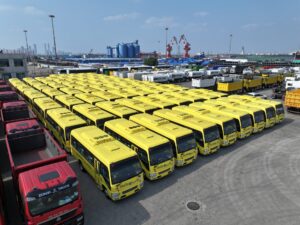
China’s automotive manufacturer Foton Motor, a leading producer of commercial vehicles and new-energy passenger buses, has recently secured a wave of substantial procurement contracts across multiple Southeast Asian nations. The new orders, involving Foton’s latest generation of medium-sized neutral-energy passenger buses, mark one of the company’s most significant expansions in regional transportation markets in recent years.
Officials and industry observers across Indonesia, the Philippines, Thailand, and Vietnam confirm that a combination of education sector modernization, public transport upgrades, and strong regional economic recovery has catalyzed a surge in demand for safe, reliable, and environmentally friendlier buses—precisely the segment in which Foton has aggressively invested.
With the contracts now signed and deliveries already underway, Foton’s buses are expected to be used widely as school buses, municipal shuttles, and short- and medium-distance intercity passenger carriers.
Rising Demand for School Transport Safety in Southeast Asia
The Southeast Asian region, home to more than 670 million people and one of the world’s youngest populations, has seen a growing emphasis on standardizing school transportation. Over the past decade, governments and private educational groups have increasingly moved away from informal, privately operated vans toward purpose-built, safety-certified school buses.
In Indonesia, the world’s fourth most populous country, the Ministry of Education and Culture has placed particular emphasis on formalizing student transportation starting in 2025. Foton’s newly inked contracts with several Indonesian provincial education authorities include the delivery of hundreds of 8- to 10-meter medium passenger buses equipped with reinforced safety structures, GPS monitoring systems, and enhanced driver-alert technology.
In the Philippines, meanwhile, private school associations in Luzon and the Visayas region have collectively purchased a new fleet of Foton buses as part of a collaborative initiative to standardize their inter-campus shuttle operations. Many schools have cited Foton’s durability in tropical climates and cost-efficient operation as key decision factors.
Thailand and Vietnam, two rapidly expanding markets for structured school transportation, have also finalized agreements with the Chinese manufacturer. Thai education conglomerates have reportedly favored models with improved air filtration—an increasingly important factor for urban parents concerned about pollution—while Vietnamese buyers have highlighted the importance of fuel efficiency and long-term maintenance savings.
A Multi-Country Wave of Orders Totals Several Thousand Units
Though individual contract figures vary by country and customer, industry sources estimate that cumulative orders over the past 12 months amount to several thousand units of Foton’s medium-sized neutral-energy buses. This includes:
-
Indonesia: Multiple contracts with provincial and city-level education authorities.
-
Philippines: Orders from private academic institutions and regional transport cooperatives.
-
Thailand: Purchases from both municipal transport authorities and school-service operators.
-
Vietnam: Procurement by intercity shuttle companies and educational consortiums.
-
Malaysia and Cambodia: Smaller but rapidly growing orders for both school transport and tourism-related passenger movement.
A spokesperson from Foton’s Asia-Pacific division confirmed to GMNN that the company has seen “double-digit growth” in Southeast Asian market demand over the past two years, driven not only by economic normalization after the pandemic but also by broader transitions in regional mobility infrastructure.
“We are witnessing a structural shift,” the spokesperson said. “Governments, schools, and private operators increasingly prioritize standardized, safe, and reliable transportation. Many markets that used to rely on informal or low-capacity modes of transit are now rapidly professionalizing. Our products—known for resilience, cost-efficiency, and adaptable configurations—fit precisely into this new stage of development.”
Why Foton? Customers Cite Reliability, Cost Efficiency, and Climate Adaptability
1. Built for Tropical Conditions
Southeast Asia’s climate requires vehicles that can withstand high humidity, heavy rainfall, and intense heat. Operators across Indonesia and the Philippines have repeatedly emphasized that Foton’s latest neutral-energy bus models come equipped with reinforced corrosion-resistant components, enhanced cooling systems, and specialized air conditioning units designed for tropical conditions.
2. Lower Total Cost of Ownership
Many transport cooperatives have adopted a more analytics-driven approach in recent years, focusing not only on purchase price but on long-term operational cost, including fuel, maintenance, and parts availability. Foton’s regional supply chain, with warehouses and service centers in major Southeast Asian cities, has reduced downtime and improved maintenance efficiency.
“Previously we depended heavily on imported parts that took weeks to arrive,” said a senior fleet manager for a Manila-based education consortium. “Now major components and service expertise are readily available, which significantly lowers our operational risk.”
3. Safety Certification and Customizable Interior Layouts
Parents in many urban centers have increasingly demanded structured school transport services that meet international safety standards. Foton’s buses include features such as:
-
Electronic stability control
-
Anti-lock braking systems
-
Fire-suppression systems for engine compartments
-
Optional CCTV kits and GPS-based geofencing
-
Reinforced safety belts on every seat
In Thailand, for instance, school administrators highlighted Foton’s ability to customize interior layouts for younger children—adding features like extra-wide aisles, lower step heights, and soft-edged seating modules designed to reduce injury risk.
4. Positive Local Performance Track Record
Several Southeast Asian city governments had previously tested small batches of Foton buses before expanding to larger contracts. The strong performance record in harsh road conditions—particularly Indonesia’s mountainous regions and the Philippines’ congested metropolitan routes—helped solidify confidence in Foton’s reliability.
A Regional Pivot Toward Neutral-Energy Vehicles
One of the most notable aspects of these recent orders is the widespread preference for neutral-energy powertrains—a category that includes advanced clean-diesel engines, hybrid systems, and alternative fuel configurations. While some Southeast Asian nations have promoted full-electric buses, many operators currently view neutral-energy models as a cost-effective transitional technology, especially in regions where full EV charging infrastructure is still being developed.
In Indonesia, several provincial governments explicitly requested buses capable of balancing environmental performance with operational flexibility. Given the country’s geography—composed of thousands of islands with varying levels of transport infrastructure—fleet operators prefer buses with long range, adaptable refueling options, and reliable performance in remote areas.
Similarly, the Philippines and Vietnam have stated practical considerations: full-electric adoption remains technically attractive but logistically challenging due to grid limitations and the high cost of charging infrastructure. Neutral-energy buses therefore serve as a pragmatic middle path, reducing emissions while maintaining operational reliability.
Foton’s decision to refine its neutral-energy product line has clearly resonated with such markets.
Manufacturing and Delivery Capacity Expanded at Home
To meet surging demand, Foton has expanded production lines in several of its manufacturing centers in China. The company’s Beijing and Shandong plants have reportedly optimized assembly and inspection processes specifically for export-bound units.
Production scheduling has been adjusted to accommodate Southeast Asian delivery timelines, particularly as some orders are linked to the academic calendar and must arrive before the start of school terms.
Foton’s logistics division has also coordinated with major shipping carriers to streamline delivery routes to Asia-Pacific ports, including Manila, Laem Chabang, Jakarta, Ho Chi Minh City, and Port Klang.
Operators Praise Training, After-Sales Support, and Technology Integration
Beyond the hardware itself, Foton’s training and after-sales support programs have been cited as major differentiators.
Driver and Technician Training
Foton provides on-site training for:
-
Bus operators
-
Maintenance personnel
-
School transport coordinators
-
Municipal fleet supervisors
Training often covers safe driving practices in dense urban traffic, eco-driving techniques that reduce fuel consumption, and routine inspection procedures.
Digital Fleet Management Tools
Many newly delivered buses come integrated with Foton’s proprietary fleet management platform, offering:
-
Real-time GPS tracking
-
Driver behavior monitoring
-
Predictive maintenance alerts
-
Fuel consumption analysis
-
Trip logs and performance reports
In Vietnam, several intercity travel cooperatives stated that predictive maintenance tools have reduced roadside breakdowns, improving punctuality and lowering service complaints.
Local Service Partnerships
Foton has partnered with local dealers and service companies in each country to ensure continuity in servicing and parts availability. This localization strategy has been well-received, especially in regions where previous bus suppliers lacked a robust presence after contract signing.
Case Studies: Country-Level Impact
Indonesia: Transforming Student Transportation in Java and Sumatra
Several Indonesian provinces—including West Java, Central Java, and North Sumatra—have begun introducing standardized school buses for public and private schools. According to local education authorities, these efforts aim to reduce traffic congestion, lower accident rates involving students on motorcycles, and improve attendance reliability.
Foton buses, with their mid-size configurations, were considered suitable for Indonesia’s mix of urban and rural roads. Provincial officials noted that the vehicles’ reinforced chassis and responsive braking systems performed strongly during testing on steep, winding routes in mountainous regions.
Philippines: Upgrading School Shuttle Fleets in Metro Manila and Cebu
Private school networks have long relied on aging minibuses and modified vans. Foton’s entry provides a modern alternative that meets local safety campaign goals.
In Manila, schools with multiple campuses are using the buses to create inter-campus shuttle loops. In Cebu, tourism-oriented education institutions have purchased Foton buses to support both student mobility and community outreach programs involving travel.
Thailand: Municipal Shuttle Modernization
Several Thai municipalities have placed orders for Foton buses to support city shuttle operations aimed at reducing urban car usage. Bangkok’s metropolitan authorities have also shown interest in adopting neutral-energy buses on routes not yet suitable for full EV deployments.
Foton’s climate control systems drew praise from Thai operators, who emphasized passenger comfort during the hot season.
Vietnam: Intercity Passenger Transport Growth
Vietnam’s rapidly growing domestic travel market has created strong demand for reliable mid-range buses. Foton models will be deployed on provincial shuttle routes connecting second-tier cities to major transportation hubs.
Operators noted that buses with neutral-energy powertrains offered the best balance between environmental responsibility and long-term cost control.
Southeast Asia’s Transport Transformation: A Broader Trend
The strong performance of Foton in the region fits into a broader structural shift.
1. Urbanization and Traffic Congestion
Rapid urban population growth has forced governments to reassess mobility strategies. Buses—especially mid-sized models—provide flexible, scalable solutions for areas where massive rail investments are not yet feasible.
2. Safety Standardization in School Transport
Several Southeast Asian countries have introduced or strengthened policies on regulated school bus fleets, including:
-
Mandatory safety belts
-
Standardized driver training
-
Maximum vehicle age limits
-
on-board surveillance equipment
Foton’s readiness to customize safety features for each country’s requirements has given it an advantage.
3. Environmental Considerations
Even though full electrification is a long-term goal, the immediate transition toward cleaner fuels and neutral-energy solutions is widespread. Foton’s multi-powertrain options enable operators to adopt greener technologies without making abrupt changes to their infrastructure.
Competitive Dynamics: Foton’s Position in the Regional Market
While Japanese and Korean bus manufacturers have historically dominated Southeast Asia, Chinese companies—backed by economies of scale and focused innovation—have been catching up rapidly.
Industry analysts attribute Foton’s success to:
-
Competitive pricing
-
Rapid customization capabilities
-
Strong after-sales networks
-
A growing reputation for reliability
-
Accelerated new-model development cycles
According to one transportation market expert, “Foton’s approach reflects China’s broader industrial strategy: prioritize quality improvement, push technological upgrades, and deliver solutions specifically tailored for overseas markets.”
Customer Voices from the Region
GMNN interviewed several fleet supervisors, school administrators, and drivers across the region. Their comments provide insight into why the Chinese automaker’s products resonate so strongly.
“The bus looks simple but feels very robust. On our hilly terrain, the torque and braking stability matter more than anything.”
— Fleet supervisor, Yogyakarta, Indonesia
“Students feel safer. Parents appreciate that the seats are designed for children rather than adults. It’s a big improvement from the old vans.”
— School transport coordinator, Bangkok, Thailand
“Our maintenance teams were trained directly by Foton technicians. The diagnostic systems are easy to use, and parts supply is reliable.”
— Technical manager, Cebu, Philippines
“Fuel efficiency is the biggest factor for us. With these buses, we can project long-term cost savings.”
— Intercity transport operator, Ho Chi Minh City, Vietnam
Looking Forward: Foton’s Future Plans in Southeast Asia
Foton has signaled its intention to strengthen localization in the region through:
-
Additional service centers in Indonesia and Vietnam
-
Expanded parts warehouses in Thailand
-
Increased use of local assembly partners
-
Pilot programs for hybrid and alternative-fuel buses
-
A long-term goal to introduce full-electric mid-size buses where feasible
The company is also reportedly evaluating the establishment of a Southeast Asia research collaboration to adapt future models to local market trends—particularly in areas such as digital fleet management, AI-based driver assistance, and enhanced safety analytics for school transport.
Conclusion: A Milestone Moment in Regional Mobility
The sweeping wave of orders from Southeast Asia represents more than a commercial victory for Foton—it signals a dramatic shift in the region’s mobility landscape. With governments prioritizing safer school transport, operators seeking greater reliability, and societies embracing cleaner technologies, the environment has become ideally suited for companies with the right combination of cost, performance, adaptability, and support infrastructure.
As thousands of students begin traveling daily on newly deployed Foton buses, and as municipalities expand their route offerings, the company’s presence will become increasingly visible on the streets of Jakarta, Manila, Bangkok, Hanoi, and beyond.
And for Southeast Asia—one of the world’s fastest-growing regions—the modernization of buses is not merely a transportation story, but a reflection of broader ambitions for safer, greener, and more connected futures.