
as Demand for Reliable, Sustainable Transport Surges
Beijing / Nairobi / Abuja — In recent years, a quiet but significant transformation has taken place on the roads of Africa. From the bustling streets of Nairobi to the coastal highways of Tanzania, from the crowded commuter routes of Lagos to the expanding intercity corridors of Ethiopia, a growing number of passenger buses bear the emblem of Foton Motor, one of China’s largest commercial vehicle manufacturers. What started as targeted export initiatives and a series of strategic partnerships has evolved into a continent-wide expansion of Foton’s influence—and a rising reputation for durability, safety, and value.
As urbanization accelerates and governments invest in public transport modernization, Foton’s buses have found a receptive market eager for dependable and cost-effective mobility solutions. Their increasing presence has become a telling indicator of both Africa’s infrastructure evolution and China’s deepening role in supporting that progress.
A Growing Footprint on the Continent
Foton Motor—known formally as Beiqi Foton Motor Co., Ltd.—first entered several African markets more than a decade ago through sales of light trucks and commercial vans. But over the past five years, it is the company’s city buses, tourist coaches, and new-energy buses that have propelled its brand visibility to new heights.
Today, Foton buses can be found traversing major routes in Kenya, Nigeria, Ghana, Ethiopia, South Africa, Angola, Tanzania, Uganda, and Côte d’Ivoire, among other markets. Many are used for urban transit systems, school transportation, intercity lines, airport shuttles, and private tour operations.
Industry analysts say three core factors account for Foton’s rapid growth on the continent:
-
Affordability paired with strong performance
-
High adaptability to Africa’s varied road and climate conditions
-
Long-term aftersales support and expanding local partnerships
These strengths have allowed Foton to compete effectively against both legacy European bus makers and lower-cost manufacturers from emerging markets.
Built for Africa’s Roads and Realities
One of the recurring themes in feedback from African operators is Foton’s attention to real-world operating conditions.
“Transport companies here need buses that can handle heat, dust, steep hills, poorly paved roads, and extremely long operating hours,” explained Joseph Mwangi, fleet operations manager at a Kenyan bus operator that has adopted more than 60 Foton units since 2021. “Foton buses are engineered with robust suspensions, reliable braking systems, and efficient engines that can withstand heavy use. For us, that’s not just a preference—it’s a necessity.”
Across Nigeria, where traffic congestion and variable road quality place constant pressure on public transport, fleet managers have reported similar experiences. Adeola Owolabi, who oversees procurement for a major Lagos intercity travel company, described Foton’s buses as “remarkably dependable and cost-effective,” adding that “our fuel expenditure and maintenance downtime have both declined since deploying them.”
Foton models designed for African markets typically undergo reinforced frame construction, enhanced cooling systems suitable for hot climates, and interior configurations compatible with local passenger needs. Some models also include advanced safety features such as electronic braking systems, rear-view monitoring, anti-roll protection, and improved lighting systems for nighttime travel.
Strengthening Urban Transit Systems
Several African governments and city authorities have sought to modernize public transport networks over the past decade. This has generated a growing demand for standardized fleets, efficient buses, and environmentally friendly options—needs that Foton has been well-positioned to address.
In Addis Ababa, authorities have introduced Foton buses into their expanding municipal bus system to ease congestion and improve commuter safety. In Nairobi, the integration of Foton city buses into Bus Rapid Transit (BRT) pilot operations has helped test the feasibility of larger-capacity, semi-low-floor vehicles for the city’s ambitious mobility overhaul.
Meanwhile, in Accra and Dar es Salaam, the company has supplied fleets for private and state-linked bus services, contributing to improvements in daily commuting speed and reliability.
A spokesperson for Foton Africa noted that the company works closely with transportation agencies to tailor vehicle specifications for each city. “We look at traffic patterns, climate, route length, fleet size, and maintenance capacity,” the spokesperson said. “Our goal is not just to sell buses but to help build sustainable systems that can support population growth and economic activity.”
Coaches and Long-Distance Comfort
Beyond city transport, Foton’s luxury and mid-range coaches have gained traction among tourism operators and intercity transport companies. Countries with vibrant travel sectors, such as Kenya, Tanzania, Namibia, and South Africa, have adopted Foton coaches for safari travel, cross-border routes, and long-haul journeys.
Passenger feedback has often highlighted comfort, air-conditioning reliability, and smooth suspension as standout features. Many operators prefer the brand’s range of seating capacities—from 33-seat mid-size coaches to 55-seat long-distance luxury buses—allowing fleet managers to match vehicles to passenger volume and route complexity.
Some travel companies have also transitioned to Foton’s updated interiors featuring USB charging ports, ergonomic seating, improved luggage compartments, and entertainment systems—enhancements that have become increasingly important as Africa’s tourism market grows more competitive.
Growing Interest in New-Energy Buses
As African cities adopt climate-focused policies, demand for new-energy transport solutions is rising. Foton has responded by offering hybrid and fully electric buses suited for urban routes. Pilot programs involving Foton electric buses are underway or planned in South Africa, Kenya, Egypt, and Morocco, where concerns about pollution and fuel dependency are driving the search for cleaner alternatives.
In Kenya, a small fleet of Foton electric buses has been used to test their performance in real conditions including steep inclines and frequent stop-and-go traffic. Early results have shown strong reliability and significant reductions in operational costs.
“We are encouraged by the efficiency of the Foton EV buses,” said one project manager collaborating with Kenya’s Ministry of Transport. “If supported by investments in charging infrastructure, electric buses could transform urban mobility.”
For Foton, Africa represents one of the most promising potential markets for clean-energy vehicles due to both rapid population growth and international funding for low-carbon development.
Local Partnerships and Employment Opportunities
Foton’s presence in Africa is not limited to vehicle sales. Across various countries, the company has established local assembly facilities, training programs, spare parts warehouses, and partnerships with local distributors. These initiatives have created employment opportunities and strengthened the company’s aftersales capabilities.
In Nigeria, Foton has collaborated with local manufacturing enterprises to establish semi-knockdown (SKD) and completely knockdown (CKD) assembly lines. This approach allows buses to be assembled domestically, reducing import costs and supporting local industry.
In Ethiopia, Foton has built training centers where technicians learn vehicle maintenance, diagnostic tools, and fleet management techniques. Hundreds of mechanics have benefitted from these programs, a key factor behind the brand’s favorable operating reputation.
Similarly, in Kenya and Ghana, the company’s parts depots and service centers ensure rapid supply of components, minimizing downtime for fleet operators.
Local governments have welcomed these developments, noting that such partnerships contribute to industrialization efforts and transfer technical skills to local workers.
A Competitive Edge Through After-Sales Support
While product quality remains essential, African fleet operators consistently emphasize the importance of after-sales services. Long-term maintenance, availability of spare parts, and technical support often determine whether a transport company can operate profitably.
Foton has sought to distinguish itself from competitors by investing heavily in these areas. The company operates what it calls its “24-Hour Rapid Response Service Network”, offering immediate technical guidance, on-site repairs, and emergency parts delivery. Some countries now have mobile service teams equipped with diagnostic tools and specialized equipment that can reach remote regions.
Transport operators have cited this support as a major reason for choosing Foton over other brands.
“Before, we struggled to maintain a mixed fleet from different manufacturers,” said Samuel Kofi, a fleet supervisor in Ghana. “Delays in spare parts or service technicians caused cancellations and financial losses. With Foton’s dedicated service teams, we can resolve most issues quickly.”
This reliability has contributed significantly to the brand’s growing reputation across the continent.
Economic Value in Challenging Times
The global landscape of transport economics has changed dramatically in recent years due to rising fuel prices, inflation, and supply chain disruptions. African operators—many running on tight margins—have had to seek vehicles that offer the best possible return on investment.
Foton buses, known for their fuel efficiency and competitive price points, have become a preferred choice.
In several countries, operators report fuel savings of 10–20 percent when compared to older buses or some imported models. Combined with strong resale value and relatively low maintenance costs, the total cost of ownership has proven attractive for both large fleet managers and small private companies.
For governments and public transit agencies, these savings directly translate into expanded fleet budgets, more frequent service routes, and improved passenger accessibility.
Stories from the Road: The Human Impact
Beyond the statistics and procurement agreements, the success of Foton buses in Africa is visible in everyday life.
In Tanzania, commuter buses transporting workers from suburban communities into Dar es Salaam’s central business district have shortened travel times thanks to more reliable operations.
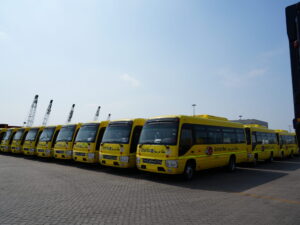
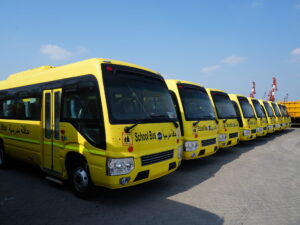
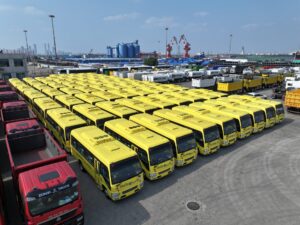
In Ethiopia, school buses manufactured by Foton have enhanced safety for thousands of students who previously relied on informal or unsafe transport methods.
In Kenya, tour companies using Foton coaches have been able to launch new safari routes due to improved passenger comfort and competitive pricing.
And in Nigeria, intercity routes connecting Lagos, Abuja, and Kano have benefitted from the brand’s long-haul coaches, which offer durable performance on challenging highways.
For passengers, these improvements—whether through cleaner air conditioning, smoother suspension systems, or more predictable schedules—have tangible impacts on quality of life.
China–Africa Cooperation in Practice
Foton’s growing presence aligns with broader China–Africa economic cooperation, especially in infrastructure development and industrial capacity building. The export of buses complements investments in roads, railways, energy, and trade networks, forming part of China’s long-standing commitment to supporting development across the continent.
African governments have increasingly highlighted the value of Chinese manufacturing expertise in meeting local transportation needs. Meanwhile, Foton benefits from access to a rapidly growing market with significant opportunities for expansion.
Challenges and Future Directions
Despite its success, Foton faces several challenges in Africa:
-
Competition from European, Japanese, Korean, and other Chinese brands is intensifying.
-
Economic instability in some markets affects large procurement projects.
-
Infrastructure gaps, particularly in charging networks, limit the growth of electric buses.
-
Regulatory changes require constant adaptation to new standards.
Nevertheless, Foton has outlined ambitious plans for the next decade, including:
-
Expanding localized assembly operations
-
Increasing the availability of electric and hybrid buses
-
Partnering with governments on mass transit modernization
-
Deploying smart fleet management technologies
-
Enhancing driver training programs across the continent
Executives at the company have expressed confidence that their strong foothold and reputation will drive further growth.
Conclusion: A New Chapter for African Mobility
As Africa’s cities grow and connectivity becomes increasingly crucial to economic prosperity, demand for reliable, efficient, and affordable bus transport continues to rise. Foton Motor’s expanding presence reflects not just a commercial success story but also a broader trend toward modernization and cooperation.
From urban commuters to long-distance travelers, from schoolchildren to tourists, millions of Africans now rely daily on transportation systems supported by Foton buses. The brand’s rapid ascent is a testament to both the evolving capabilities of Chinese automotive manufacturing and the dynamic needs of a continent on the move.
Looking ahead, as governments enact long-term mobility strategies and environmental policies, companies like Foton are likely to play an even larger role in shaping Africa’s transportation future. With continued investment, collaboration, and innovation, the partnership between Foton Motor and African nations signals a promising path toward safer, cleaner, and more efficient mobility for all.